5 Essential Warehouse Safety Tips
Hamza Al-amin · Article, Insights

5 Essential Warehouse Safety Tips to Protect Your Workforce
Table of Contents
Introduction
Tip 1: Maintain Clear Walkways and Work Areas
Tip 2:. Use Equipment and Machinery Safely
Tip 3: Provide Proper Manual Handling Training
Tip 4: Enforce PPE and Safety Rules
Tip 5: Implement Ongoing Safety Training and Risk Assessments
Warehousing Safety Training Materials
Common Warehouse Hazards
Benefits of Strong Warehouse Health and Safety Practices
Conclusion
Warehouse environments are fast paced and often high risk. Moving vehicles, heavy loads, manual handling, and tight deadlines all increase the likelihood of incidents if controls are not in place. Strong warehouse safety practices reduce injuries, limit downtime, and support legal compliance. This guide outlines five practical warehouse safety tips to help you reduce accidents, improve compliance, and protect your workforce.
5 Essential Warehouse Safety Tips
1. Maintain Clear Walkways and Work Areas
One of the most basic but frequently overlooked aspects of warehouse safety is housekeeping. Poorly maintained floors and cluttered aisles are a leading cause of slips, trips, and collisions.
Clear walkways allow employees and vehicles to move safely without obstruction. Pallets, packaging, and unused equipment should never be left in aisles or emergency routes. Floors should be kept clean and dry, with spillages dealt with immediately.
Pedestrian routes and vehicle routes should be clearly marked and physically separated where possible. This reduces the risk of workers stepping into forklift paths. Adequate lighting is also essential so hazards can be seen early.
Regular inspections help maintain standards. Warehouse safety rules should clearly define housekeeping responsibilities and outline what good looks like on a daily basis.

Key Points:
Keep aisles, exits, and stairways clear at all times
Store pallets, packaging, and materials in designated areas
Use floor markings to separate pedestrian and vehicle routes
Clean up spills and debris immediately
Carry out regular housekeeping inspections
2. Use Equipment and Machinery Safely
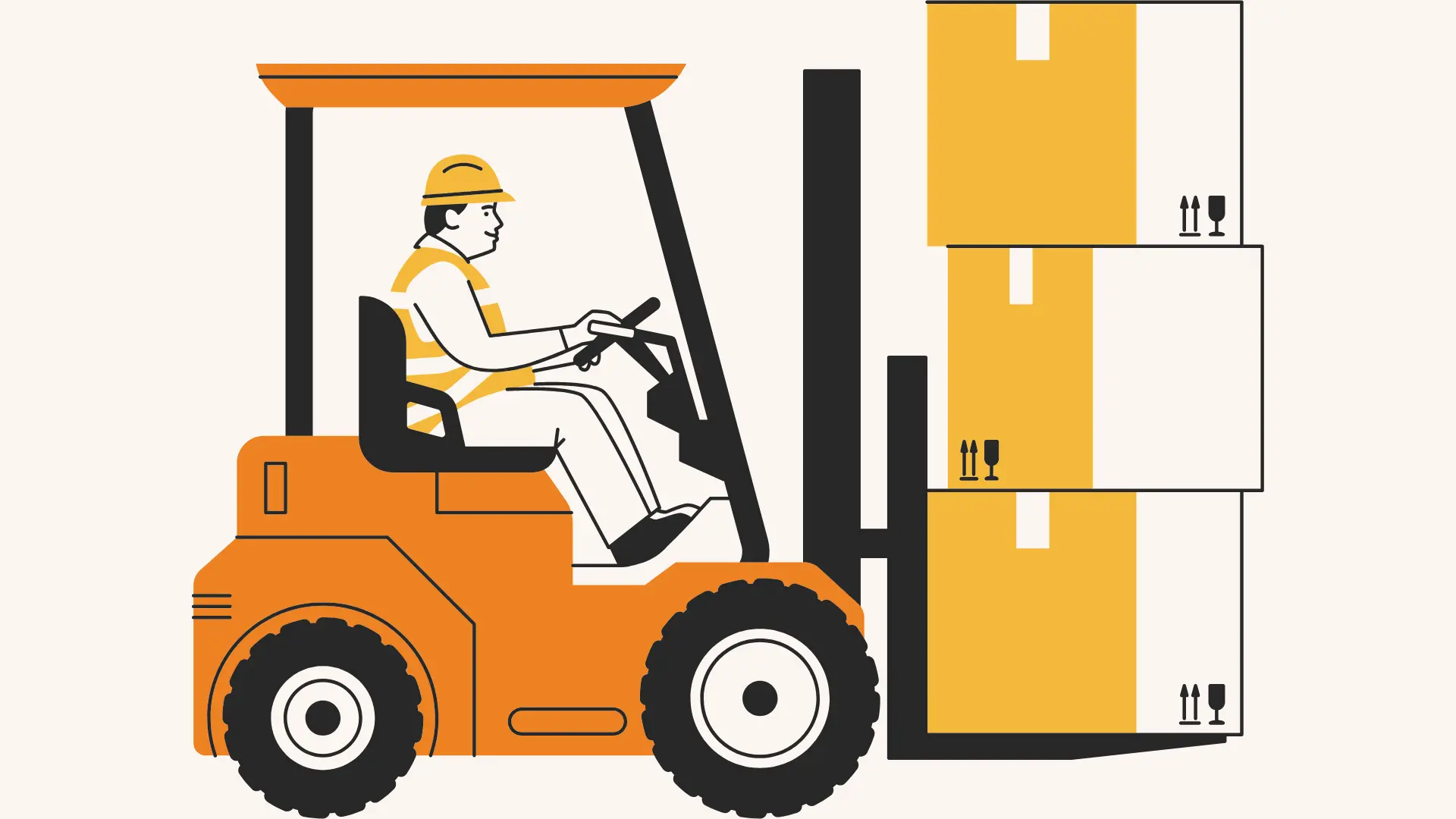
Forklifts, pallet trucks, conveyors, and automated systems are central to warehousing safety but also represent some of the highest risks. Poorly maintained or incorrectly operated equipment can lead to serious injury or fatal incidents.
Only trained and authorised employees should operate machinery. Warehouse safety training should cover correct use, speed limits, load capacity, and safe stopping distances. Operators must understand the risks of reversing, turning, and working in shared spaces.
Daily checks are critical. Faulty brakes, worn tyres, damaged forks, or broken guards should be reported and removed from service immediately. Maintenance schedules must be followed and documented.
Clear signage reinforces safe behaviour, such as speed restrictions and exclusion zones. Safe equipment use is not just about training but about consistent enforcement of warehouse safety rules.
Key Points:
Ensuring only trained and authorized staff operate equipment
Completing daily pre-use inspections
Following load limits and stability guidelines
Observing speed limits and site traffic rules
Reporting faults and defects immediately
3. Provide Proper Manual Handling Training
Manual handling injuries remain one of the most common causes of lost time in warehouses. Lifting, carrying, pushing, and pulling heavy or awkward loads can lead to long term musculoskeletal issues if not managed correctly.
Warehouse safety training should teach employees how to assess loads before lifting, including weight, shape, and stability. Workers should know when a task requires mechanical assistance or team lifting rather than individual effort.
Mechanical aids such as pallet trucks, lift tables, and conveyors should be readily available and easy to access. If equipment is difficult to find or slow to use, workers are more likely to lift manually.
Training should also cover posture, grip, and movement, as well as the importance of taking breaks during repetitive tasks. Good warehousing safety focuses on reducing strain, not just preventing immediate injury.
Key Points:
Train employees in correct lifting and carrying methods
Encourage staff to assess loads before moving them
Provide mechanical aids such as trolleys and lift assists
Promote team lifting for heavy or awkward items
Rotate tasks to reduce repetitive strain

4. Enforce PPE and Safety Rules
Personal protective equipment plays a key role in warehouse health and safety, but only when it is used correctly and consistently. PPE requirements should be clearly defined based on risk assessments for each task and area.
Common warehouse PPE includes high visibility clothing, safety footwear, gloves, eye protection, and hearing protection. Employees must understand why PPE is required and the risks of not wearing it.
Clear warehouse safety rules help remove ambiguity. These rules should be communicated during induction, reinforced through signage, and supported by supervisors on the floor. Inconsistent enforcement undermines the entire safety system.
PPE should be suitable, well maintained, and replaced when damaged. If PPE is uncomfortable or impractical, workers are less likely to comply. Good warehouse safety relies on realistic and enforceable controls.
Key Points:
Defining required PPE for each task and area
Providing suitable safety footwear, high visibility clothing, gloves, and head protection
Displaying safety signage clearly
Training staff on correct PPE use and maintenance
Monitoring compliance and addressing breaches

5. Implement Ongoing Safety Training and Risk Assessments
Warehouse safety is not a one time exercise. Processes change, layouts evolve, and new risks emerge over time. Ongoing training and regular risk assessments are essential for maintaining safe operations.
Refresher training helps reinforce correct behavior and address bad habits before they lead to incidents. Toolbox talks and short safety briefings are effective ways to keep warehouse health and safety visible and relevant.
Risk assessments should be reviewed regularly and whenever there are changes to equipment, layout, or workload. Employees should be encouraged to report hazards and near misses without fear of blame.
Modern warehouse safety training methods, including interactive e-learning, can help workers better understand risks and consequences. The goal is not just compliance but awareness and accountability.
Key Points:
Regular refresher training on warehouse safety
Toolbox talks and safety briefings
Routine workplace inspections
Updated risk assessments after changes
Systems for reporting hazards and near misses
Ongoing training ensures that employees remain aware of risks and understand their responsibilities under warehousing safety standards.
Warehousing Safety Training Materials
If you want to strengthen your warehouse safety training using modern, engaging learning solutions, look no further!
Contact SHIIFT to discuss how our immersive and interactive training can support your health and safety goals. For one of our clients, we created an immersive hazard hunt experience where users can explore and find risks/hazards, and learn about best practice in an engaging format and all directly within their learning management system!
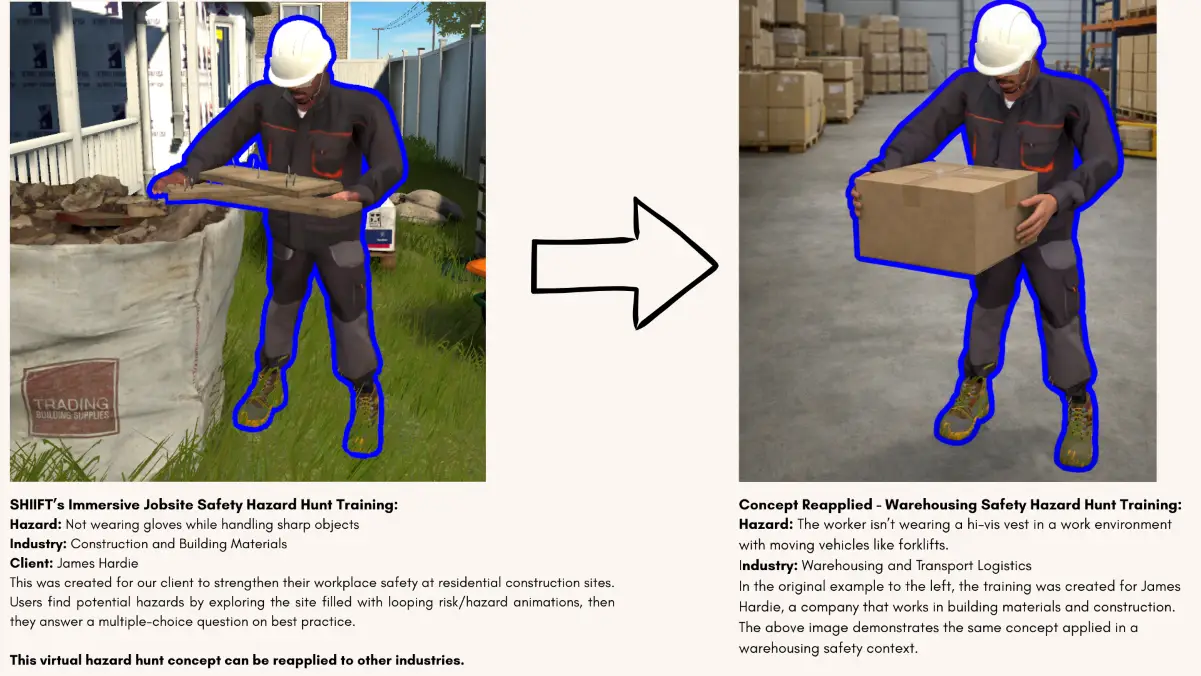
Immersive hazard hunt training concept We also specialize in custom E-Learning development, 3D animated or live-action training videos, VR simulations, etc. Check out more of our projects here.
Common Warehouse Hazards to Watch For
Vehicle and pedestrian interaction
Falling objects from racking
Poor storage practices
Inadequate lighting
Noise and dust exposure
Fatigue and repetitive tasks
Addressing these hazards through structured warehouse safety rules and training reduces both short term incidents and long term health issues.
Benefits of Strong Warehouse Health and Safety Practices
Effective warehousing safety delivers measurable benefits. Fewer accidents mean reduced downtime, lower insurance costs, and improved productivity. Employees are more confident and engaged when they feel protected, which improves morale and retention.
From a compliance perspective, clear warehouse safety rules and documented training help demonstrate due diligence and reduce the risk of enforcement action. Safety done properly supports both people and performance.
Conclusion
Effective warehouse safety relies on clear procedures, consistent training, and active management involvement. By maintaining clean work areas, using equipment correctly, improving manual handling practices, enforcing PPE rules, and investing in ongoing training, organisations can significantly reduce workplace risks.
These five warehouse safety tips provide a practical framework for building a safer and more compliant operation.