Virtual Reality
Project
GE F110 Turbofan
Category
Virtual Reality
Sectors
Aviation & Aerospace, Defence & Security
Video
Objective
SHIIFT was tasked with providing solutions whereby trainees could improve their familiarization with the GE F110 Turbofan as well as perform regular and routine maintenance on virtual engine units, all without the need for live units to be present.
Approach
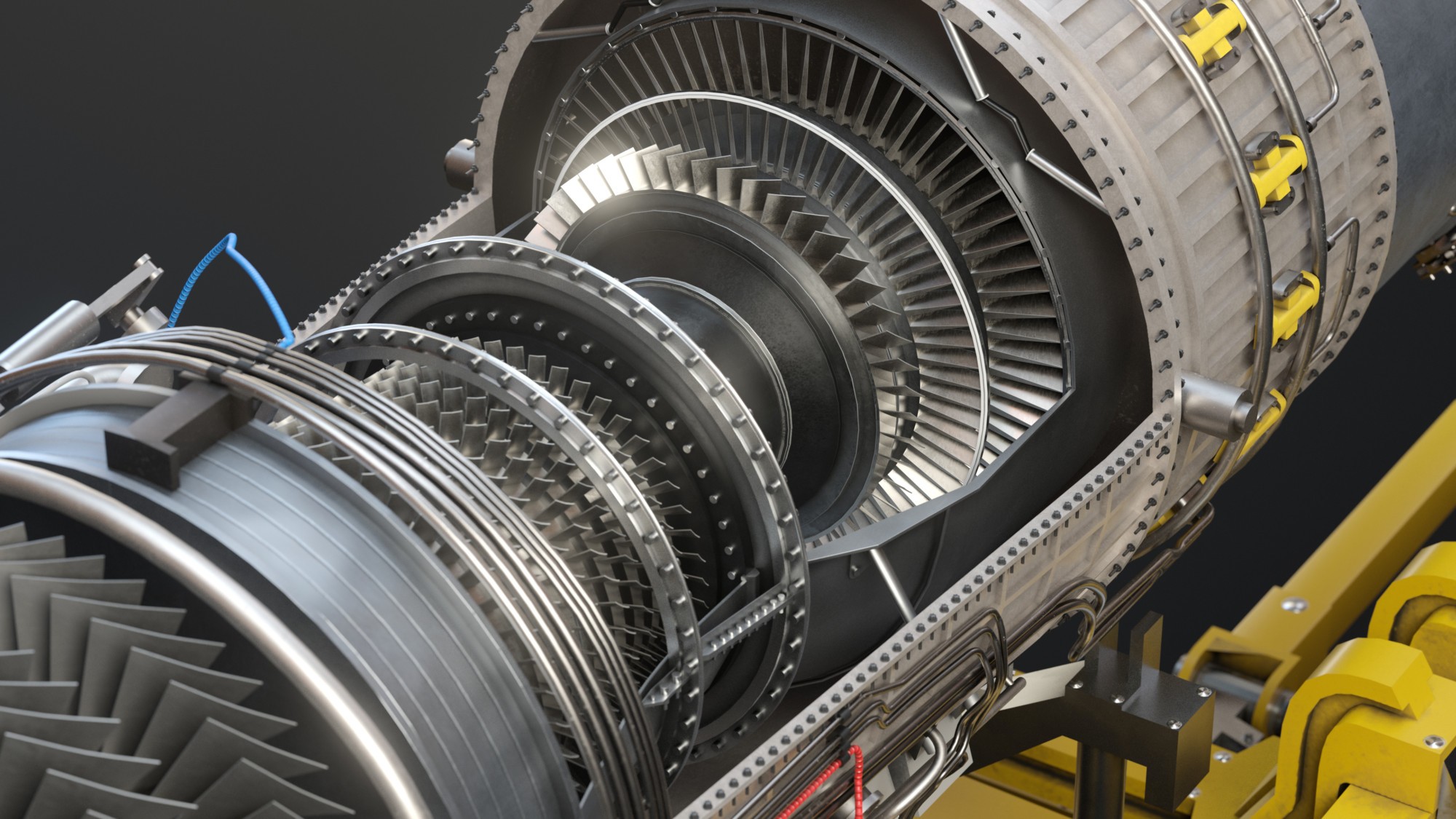
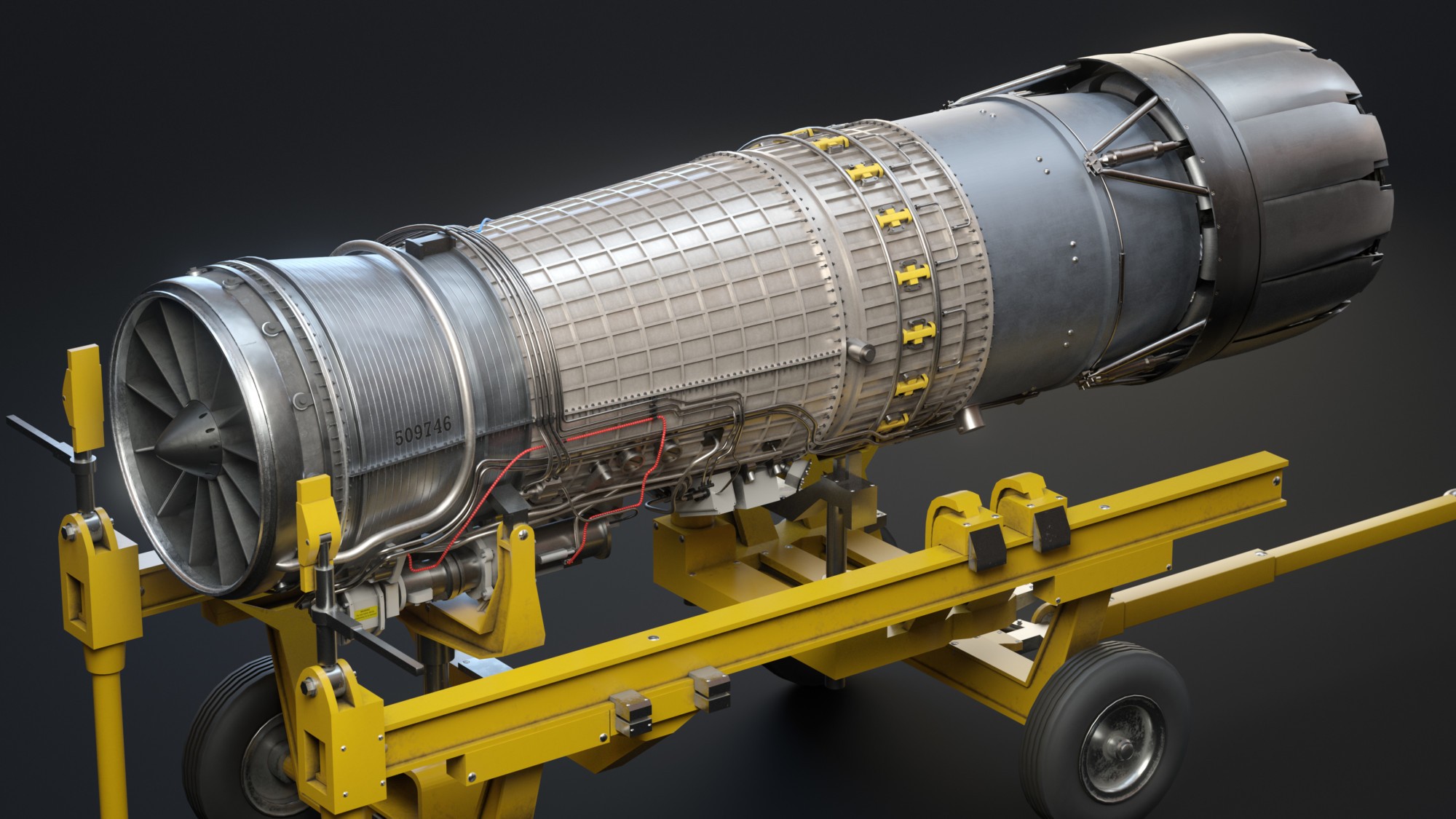
Our team undertook the development of a fully simulated, photo-realistic Virtual Reality (VR) digital twin of the F110 gas turbine, including all accompanying eLearning modules needed to familiarize trainees with every aspect of the unit and its maintenance.
The Problem
Lack of available GE F110 turbofan units to train on
Within the aerospace and defense sector, many trainees are faced with the challenge of too few available live engine units such as the GE F110 Turbofan. Consequently, there is a growing demand for simulated virtual experiences within which trainees can practice maintenance. By providing virtual simulations, trainees could obtain practical ‘hands-on’ experience with virtual assets while simultaneously reducing the need for live, physical units, thereby reducing the overall expenditures and resource requirements within the aerospace and defense industry.
Another challenge which had to be overcome is the high risk of damage to serviceable engines by trainees unfamiliar with units such as the GE F110 Turbofan, which can result in a loss of operational capability and incur significant costs. Therefore, the solution needed to overcome these challenges by providing realistic, scaled virtual engine units with which trainees could familiarize themselves, as well as providing the ability to repair and maintain these units in a controlled virtual setting before working with live units.
The Solution
Interactive VR Aerospace Training of GE F110 Engine
Through SHIIFT’s fully virtual, simulated digital twin of the GE F110 Engine unit, including eLearning modules, our solution enabled trainees to interact and learn about the unit in a secure environment. This resulted in greater operational efficiency and fewer failures that would have resulted in costly damage to live operational assets. This optimized the existing aerospace maintenance training and completely transformed how aerospace maintenance training is carried out.
The innovative solution used a combination of both Virtual Reality (VR) capabilities as well as blended eLearning modules which facilitate learning, training, and the evaluation of key skills related to the maintenance of the GE F110 Turbofan.
The application has three core components:
Interface for trainers/instructors
Immersive VR space for trainee/student learning
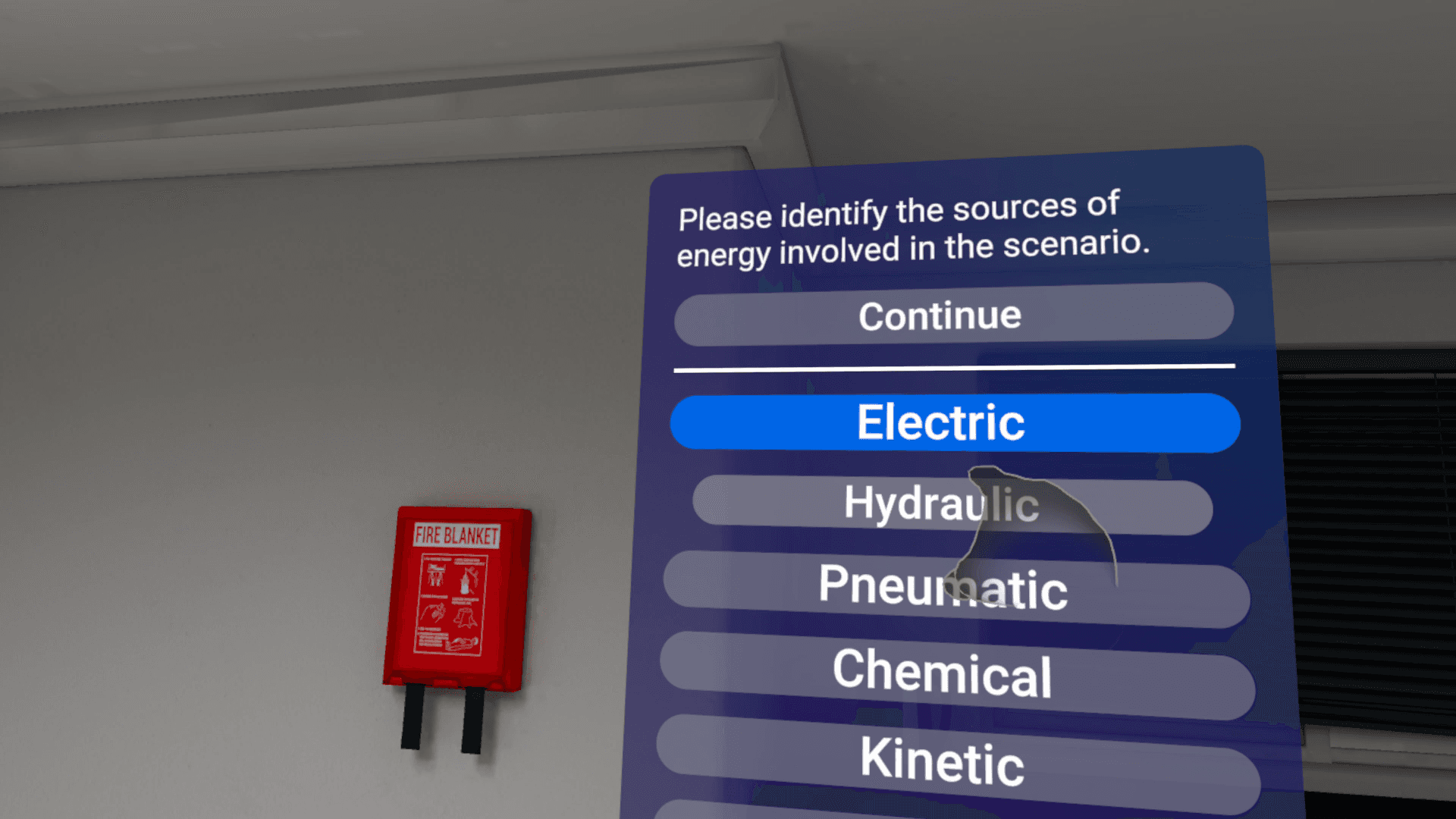
Training assessment
Although the application is intended for one-on-one training, it can be modified to be self-run by students.
Application Touchpoints – Instructor
Instructor can teleport/position the student to one of three predefined positions around the engine
Instructor can remove and re-place engine panels to reveal inner workings
Instructor can assign a fault for the student to find
Instructor can activate the rotation of the turbine
Instructor can turn the student’s headtorch on and off
Instructor can end the session
Application Touchpoints – Student
Student can remove and re-place engine panels to reveal inner workings
Student can rotate the turbine by hand
Student can find, identify and report faults assigned by the instructor
Student can “walk”/teleport around the engine
Student can take the assessment/quiz
Development engine
The VR application and eLearning modules were developed using the Unity game development engine, a reputable and widely used development engine for 3D games, VR, and Augmented Reality (AR) applications.
Which services did you use for this? Was it just VR?
Our e-Learning demonstration application was used for the F-16 (GE F110 Turbofan) engine and the demo required two users to complete. The first user, the instructor, guides the trainee through the simulated environment and is able to evaluate and assess their performance. The second user, the trainee, is tasked with detecting faults assigned by the instructor. The demo keeps full records of vital statistics and key performance indicators of the trainee’s performance and provides an opportunity to test the trainee provided they have achieved a performance threshold.
How long did it take?
The total duration of the project was 6 weeks from the start of the project to its completion and submission to the client.
When was this completed?
The GE F110 Turbofan training solution and VR application were delivered to the client in February 2020.
Gallery
PROJECTS YOU MIGHT BE INTERESTED IN
See all work