Top 5 Mixed Reality and AR/VR Headsets in 2026
Hamza Al-amin · Article, Mixed Reality, Virtual Reality

Top 5 Mixed Reality and AR/VR Headsets in 2026
Table of Contents
What are Virtual & Augmented Reality Headsets?
Best VR/AR/MR Headsets for Affordability
Best VR/AR Headsets for Advanced Tracking
Best VR/AR Headsets for Those With Lots to Spend
What’s the Best VR/AR Headset for Me?
What are Virtual & Augmented Reality Headsets?
Before we begin, what exactly is a Virtual Reality (VR) headset? It’s a type of headgear that come with small but ultra high resolution screens positioned close to the user’s eyes to alter their perception of reality and tricking their brains into feeling as if they are truly in a different place or reality, hence the term virtual reality.
So then what’s an Augmented Reality (AR) headset? Similar to VR headsets, an AR headset is a type of headgear that position screens to a users eyes in order to alter how they see the world. The difference here is when someone is in a virtual reality, they are visually completely immersed in a virtual world. They can’t see anything from the real world, only their virtual hands, and whatever environment the VR headset has them in. Turning their head and looking around will have them looking around in the virtual world based on their real movements.
However, in augmented reality, it’s different in that you can still see the real world, so the screens are used to add visuals to ‘augment’ your real world experience. It overlays digital content into the real world. It’s the same way you see things now, but with the added ability to look at something and use hand gestures or eye-tracking controls to get more information. Imagine you can look at a product and see text float above it with information about it’s price, materials, cheap offers online for the item, etc. Or if you’re cooking a meal and want an AI cooking assistant to go through the recipe with you along the way.
Mixed reality (MR) is the advanced form of augmented reality which started out as just using a phone camera or glasses with limited capability, and can now be used more interactively and immersively. And extended reality (XR) is the catch-all term for all of these different reality altering technologies, VR, AR, MR, XR.
Best VR Headsets for Affordability
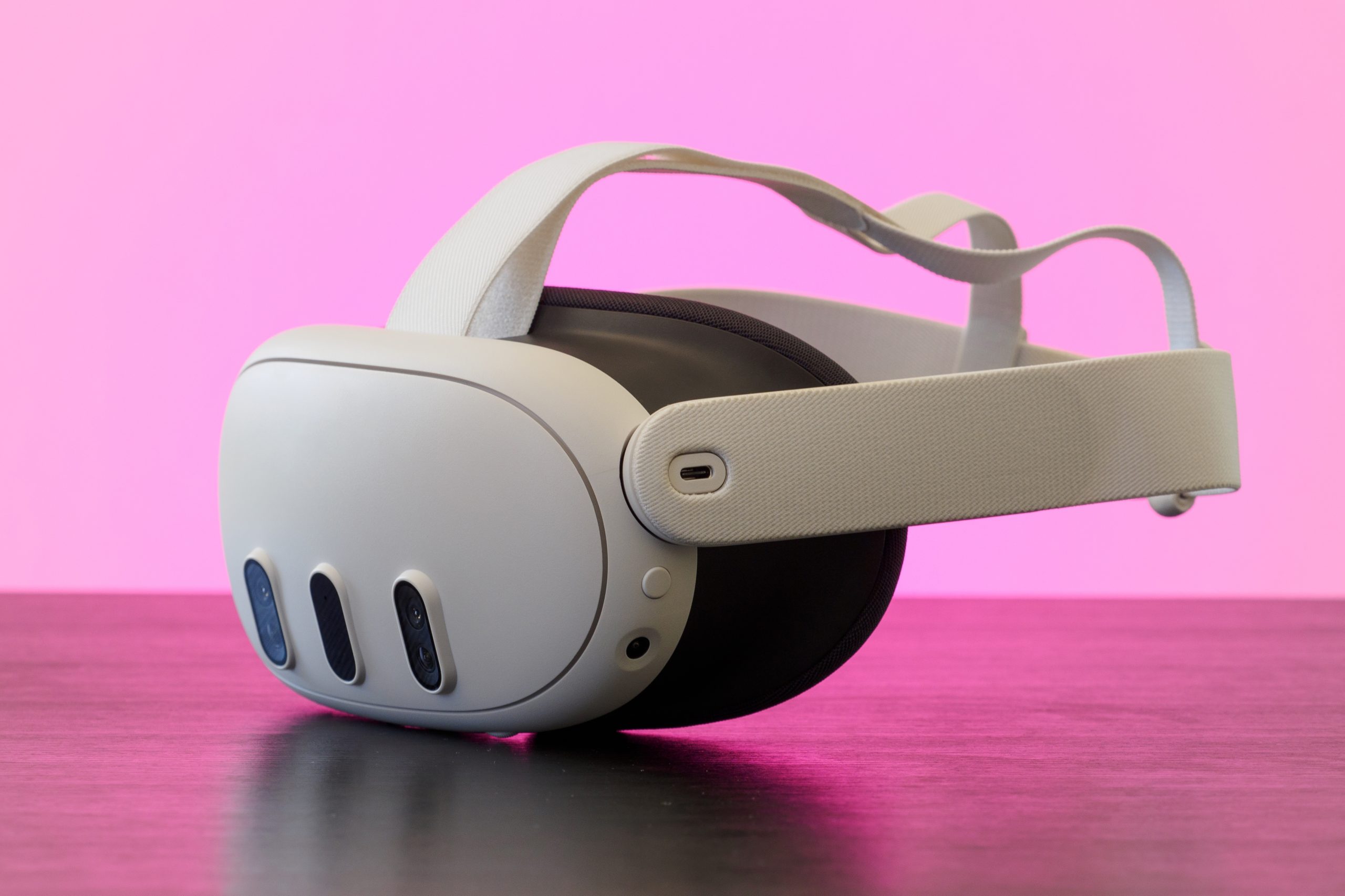
Meta Quest 3 Mixed Reality & VR Headset
The Meta Quest 3 is hands down the best affordable headset with a starting price of $500.
It’s a standalone headset which means it doesn’t require external sensors or a powerful gaming PC which can add a lot to expenses when wanting to use virtual reality.
It has a solid amount of applications available from the quest store as well as the capability to use PCVR software by tethering it to a gaming pc.
Pros:
Affordable price range
Completely wireless
Access to quest store exclusives
Can run PCVR content, via Wi-Fi or link cable
Has built-in hand tracking
Uses cameras on the headset, so no need for external sensors
Can do virtual reality as well as augmented/mixed reality.
Cons:
Wirelessly streaming PCVR content can have latency issues which can also cause visual artifacts
Using a link cable for PCVR content can have slightly worse visual performance compared to traditional PCVR headsets using DisplayPort
Cannot track hands or controllers behind the player or from certain angles (Generally a non-issue)
Photo Credit: Trusted Reviews
Meta Quest 3S Mixed Reality & VR Headset
The Meta Quest 3S is the next best option for an affordable headset with an even cheaper starting price of $300.
Similarly to the Meta Quest 3, it’s a standalone headset so it doesn’t require any external sensors or a powerful gaming PC.
It can run all the same applications the Quest 3 can, but has a few downsides in that it’s missing a headphone jack, and has a slightly worse display, though it’s worth mentioning it also has a slightly longer battery life by about 20 minutes.
Pros:
Most affordable headset
Completely wireless
Access to quest store exclusives
Can run PCVR content, via Wi-Fi or link cable
Has built-in hand tracking
Uses cameras on the headset, so no need for external sensors
Can do virtual reality as well as augmented/mixed reality.
Cons:
Wirelessly streaming PCVR content can have latency issues which can also cause visual artifacts
Using a link cable for PCVR content can have slightly worse visual performance compared to traditional PCVR headsets using DisplayPort
Cannot track hands or controllers behind the player or from certain angles (Generally a non-issue)
Missing a headphone jack which is available on the Meta Quest 3.
Uses Fresnel lens which doesn’t produce as clear of an image as the more modern pancake lenses.
Best VR Headsets for Tracking Accuracy
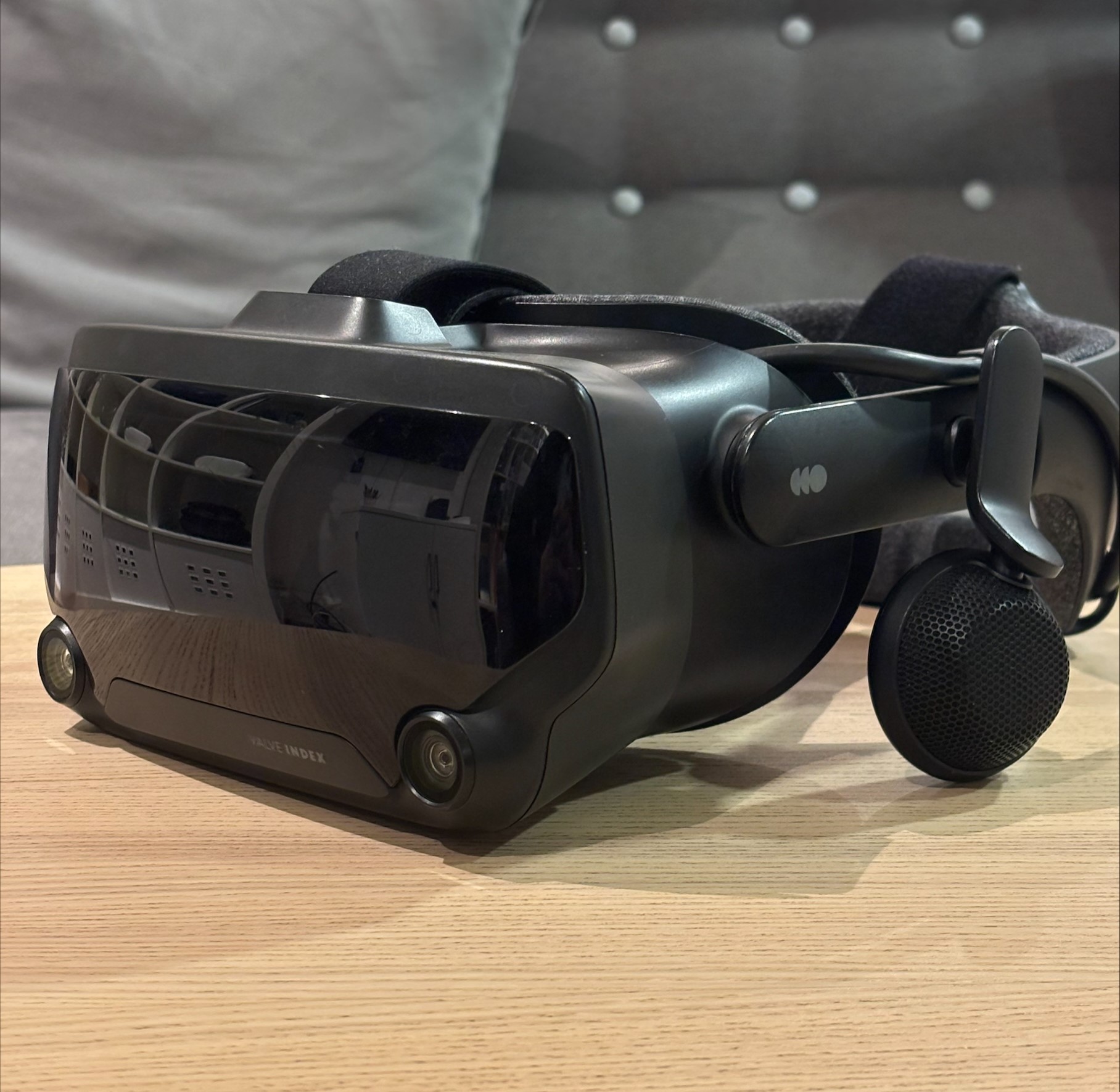
Valve Index VR Headset
The Valve Index has stood as the best quality virtual reality headset for a long time, with the price of $999 for the full kit not including a VR Ready PC. But this was before recent years where there are more affordable options that offer much better value for similar performance.
Valve Index requires external sensors called base stations, the base stations system are used across a variety of different VR headsets as they offer the most accurate tracking, based lasers which can track controller movements perfectly as long as there is a base station placed in a position it can see them.
They don’t have access to some Meta Quest store or PlayStation store exclusives, but can run anything on PCVR. Since it uses DisplayPort, it also means a slight increase in quality to those with a discerning eye. Pros:
Higher quality visuals for PCVR compared to the cheaper options
Most accurate tracking system using base stations
High quality audio system
Higher refresh rate
Cons:
No built-in hand tracking
Uses Fresnel lens which doesn’t produce as clear of an image as the more modern pancake lenses.
Can’t be used for mixed reality
Requires powerful PC to be used
Requires cables which make it bulkier and messier
Heavier than the lightweight options
Bigscreen Beyond 2 VR Headset
Revealed in early 2025, the Bigscreen Beyond 2 is a really unique headset, it was designed to have the highest level of clarity while having the best comfortability of a VR headset too.
It’s an incredibly lightweight headset, and tailored each headset to be custom-built to the shape of the user that purchases it. This also helps in trapping light outside of the headset which is more of a challenge for the usual one size to fit all users approach.
While the headset has stunning visual quality and comfort, it comes at a much higher price point of $1019 ($1219 for the eyetracking edition) and buyers would need to purchase controllers and base stations separately which adds to the cost even more (~$500 – $600 not including the PC). How does the Big Screen Beyond 2 compare to it’s predecessor, the original Big Screen Beyond? With the Big Screen Beyond being discontinued since it’s sequel being released mid 2025, the creators of this extraordinary VR headset gave it some significant upgrades and solutions to the issues that were faced with it’s original.
Big Screen Beyond 2 is ~15% lighter than the original Big Screen Beyond, which was an already impressively lightweight VR headset
Comes with optional eyetracking features
Improved pancake lenses which resolved the issues with glare and lens flare in the original Big Screen Beyond, a massive upgrade to the immersiveness of the headset
Improved Field of Vision (FOV) from 102° to 116°
Improved range of adjustable IPD (Inter-pupillary distance, the distance between somebody’s eyes) which helps it be usable by a wider range of users
Pros:
Highest quality screens for PCVR (PCVR is the platform with the largest and most open library)
Uses accurate tracking system via base stations
Ultra high resolution
Custom-built to fit perfectly for users, removing any light bleeding into the headset.
Incredibly lightweight and comfortable thanks to the weight and custom built feature.
The Bigscreen Beyond 2e upgrades the base model to include state of the art eyetracking, available for an additional $200 raising the cost from $1019 to $1219.
Cons:
No hand tracking
Very expensive
Can’t be used for mixed reality
Requires a powerful PC to be used
Requires cables which make it bulkier and messier
Is more difficult to share the experience of VR due to the custom-built fit.
Best Vr/ar/mr Headsets for Those With Lots to Spend
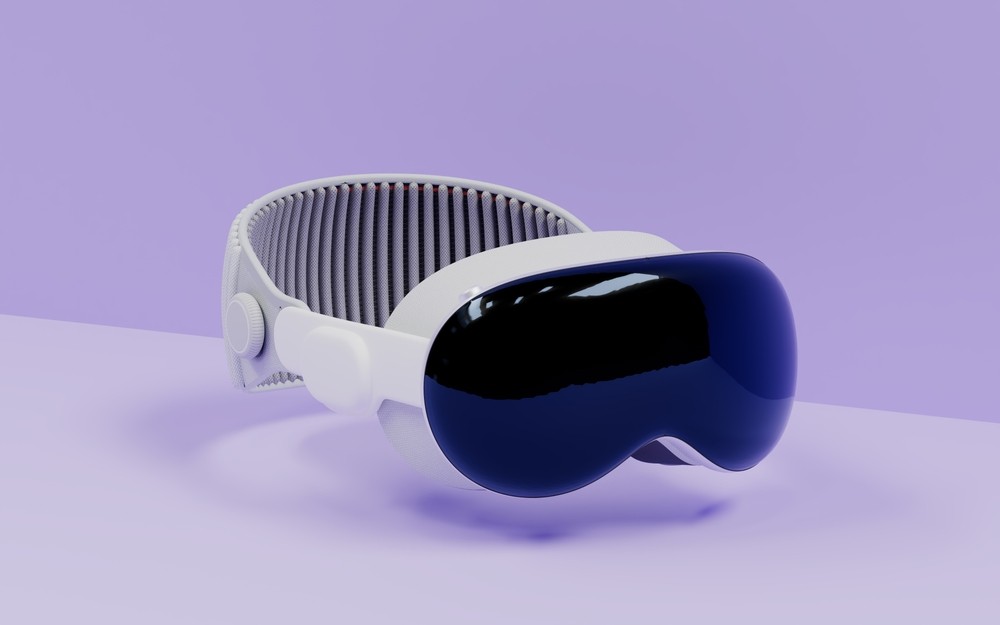
Apple Vision Pro Mixed Reality Headset
The Apple Vision Pro is a recent headset that caused a surge of excitement in VR community and mainstream communities when it was revealed in 2023. The mixed reality head set is one of a kind with an even better display then Bigscreen Beyond 2.
It’s controlled by eye movement and has the highest quality cameras and screens of any mixed reality headset. It also comes with a bunch of features that make it perfect for users of Apple products.
While it did take the world by storm after it was released, it’s incredibly expensive and unaffordable for most people at a starting price of $3499. It also not made to work with PCVR games which means it’s on it own ecosystem of Apple software and software needs to be developed specifically for Apple’s Vision OS. Pros:
Highest quality screens in a headset
Highest resolution on a VR/AR headset
Works with other Apple devices for creating extra screens
Hand and Eye tracking controls
Cons:
Very expensive
Standalone headset with it’s own software ecosystem, not the best option for VR gamers
On the heavier side compared to other choices
What’s the Best Headset for Me?
So, what’s the best headset for your specific needs? If you’re new to VR and interested in trying it out, I’d recommend the Meta Quest 3 or Meta Quest 3S, both are great options at a lower price range.
If you’re mostly interested in gaming, particularly on PCVR and you’re willing to spend some extra money, go for the Bigscreen Beyond 2. The Valve Index is also a solid choice, but if you’re looking to spend less, you’re likely better off going for one of the Meta Quest headsets unless the tracking, great audio, slightly better visuals and refresh rate is more important to you then the lightweight Meta Quest options which also come with mixed reality, better resolutions and better screens.
If you’re less interested in gaming, and have a lot to spend, then the Apple Vision Pro can offer the highest quality experience with it’s only main downside being the smaller library of applications and price. It can be great for productivity, especially if you have other apple products, and it’s the highest quality mixed reality experience available.
If you’re thinking about VR training, the Meta Quests are the best option for buying in bulk for your company, especially if you don’t require higher graphical fidelity that you’d find if you tethered your VR headset to a high-end PC for PCVR. You might feel that your training needs the level of graphical fidelity that comes with tethered VR, but believe me, the level of immersion you can feel even in Meta Quest standalone software can be mindblowing when you actually put the headset on.